
What is a niche game that you loved and holds a special place in your heart, but doesn’t seem to get the love you feel it deserves from a wider audience? Or maybe you have a friend who absolutely loves a particular game, but it just doesn’t resonate with you, or maybe you outright despise it.
Yet we as gamers are all having fun, whether your fun is a low-key cozy game, a multiplayer shooter, beating your head against an indie rage game, or compulsively clicking “Next Turn” until 2am in Civilization (guilty).
So where’s the fun? If you’re making a game you want it to be fun, but what does that even mean? As a game designer and developer, is it up to you to figure out what “fun” means when creating a game?
That’s like a comedian sitting down and figuring out what “humor” is before writing any jokes.
It’s something you just know. And it’s different for everyone. The question for a game designer then is – “How do I maximize the ‘fun’ in my game?”
I believe the answer is in the player experience.
The Experience
People can argue all day long about what makes a game fun. Is it the theme? The story? The interactions? The mechanics? The art? The sound design?
All of that contributes to the fun factor of a game, but none of that is THE fun.
The fun or enjoyment of a game comes from the designer carefully weaving all of those elements together for one cohesive experience. This strong cohesive experience can help draw players in who may be turned off by one of the elements of your game.
For example, I am not a big fan of 2d side-scrollers or Metroidvania-style games, yet I picked up and played Hollow Knight because of how many positive things I heard about it. It’s such a great game. The style, visuals, and sound design kept me engaged and interested, despite it being a type of game that I would otherwise pass on.
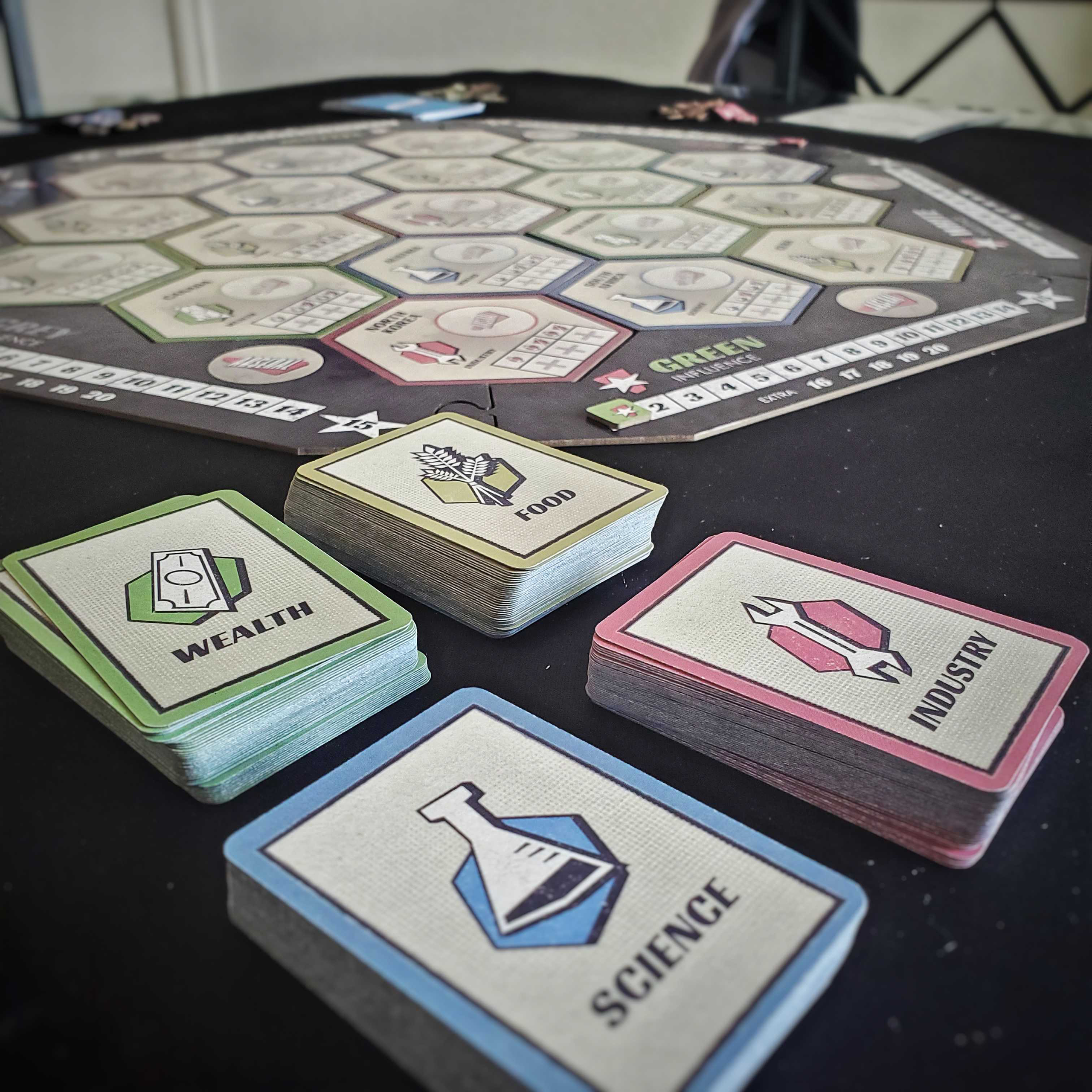
Similarly, this is what I have been aiming for with Atomic Edge. The initial concept – and what I still aim for today – is a Cold War-themed strategy game that captures the uneasy tension of a nuclear arms race, but presents it in a way that is accessible to a broader range of players.
I designed the game with my wife and family in mind. I am a history fan and created a game that I would enjoy playing, but also kept the average gamer in mind. I wanted someone who wasn’t a history fan or a strategy gamer to be able to sit down, understand, and enjoy the game.
Broaden Your Audience
By aiming for simplicity and clean, clear presentation, you can draw in people who otherwise wouldn’t play your style of game. This is where the “art” of game design comes in. It can take effort and skill to weave all of these different skills together to create an enjoyable player experience.
But what does an enjoyable player experience look like? We’re digging into the “fun” aspect of games and game design, but if “fun” is ultimately a positive player experience, what does that look like?
- Are the rules clear and easy to understand?
- Are the mechanics simple enough to move the game forward, yet complex enough to bring something unique to the table?
- Is the game visually appealing and easy to comprehend visually? Similarly this can go for music and sound design if you are working with videogames.
- Do the players have a solid “why” for what they are doing?
The goal is to make sure any player who picks up your game can have an easy, streamlined experience when learning and playing it, with as few speed bumps and roadblocks as possible.
Despite covering all of the basic elements of a positive player experience, it is important to remember that everyone has different tastes and interests, so there will still be people who do not like your game for whatever reason.
That’s ok. You’re not meant to make everyone happy.
Making sure your player experience is smooth and easy will help draw more players in who otherwise might not consider a game like yours.